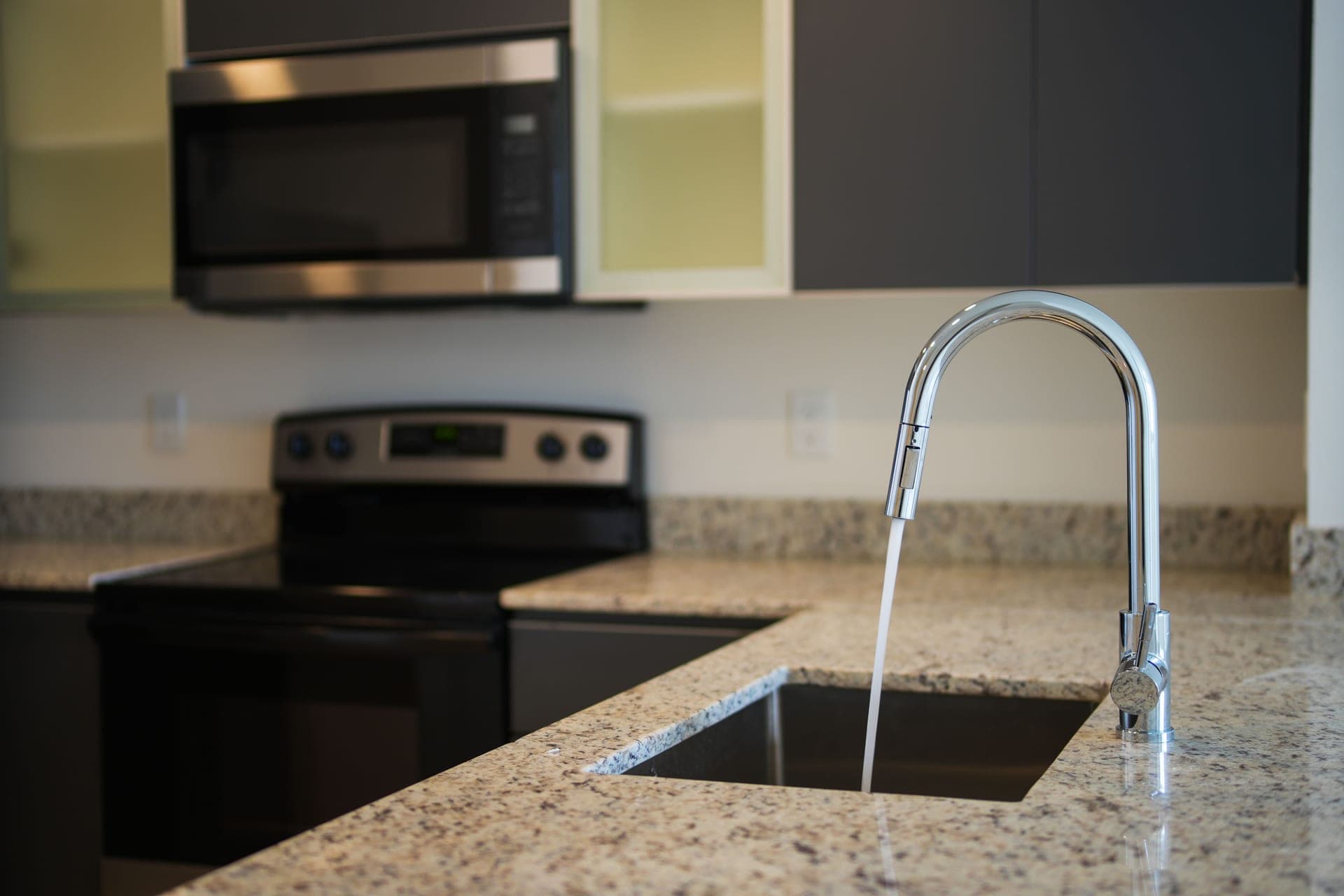
Berkey is a gravity system certified under NSF/ANSI 42 for chlorine, taste and odor, with its wider claims resting on company-commissioned testing. Reverse osmosis is certified under NSF/ANSI 58 and reaches fluoride, nitrate, arsenic and dissolved solids. Berkey needs no power; reverse osmosis needs pressure and makes wastewater.
Quick picks
Tap any row to jump to the full write-up. The button goes straight to the retailer.
| # | Product | Best for | Price |
|---|---|---|---|
| 1 | 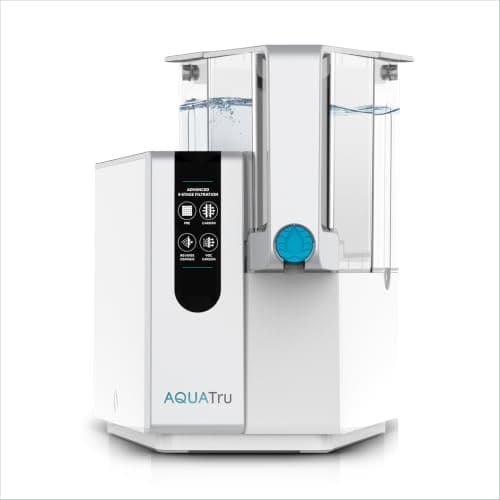 AquaTru Classic Countertop Reverse Osmosis PurifierReverse osmosis certified by IAPMO across 84 contaminants, on a counter, with no plumbing. AquaTru Classic Countertop Reverse Osmosis PurifierReverse osmosis certified by IAPMO across 84 contaminants, on a counter, with no plumbing. | Best of both worlds | $403.75 - View on Amazon $475.00 — 15% off #ad Price as of October 7, 2026. We may earn a commission. Disclosure. |
| 2 | 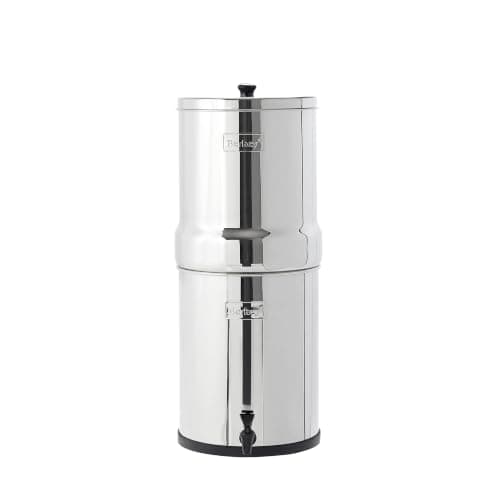 Big Berkey 2.25-Gallon Gravity System (with BB9-2 elements)NSF-listed under 42 for chlorine, taste and odor at a 1,050-gallon service cycle. No power, no pressure. Big Berkey 2.25-Gallon Gravity System (with BB9-2 elements)NSF-listed under 42 for chlorine, taste and odor at a 1,050-gallon service cycle. No power, no pressure. | If power is the constraint | $367.00 - View on Amazon #ad Price as of October 7, 2026. We may earn a commission. Disclosure. |
| 3 | 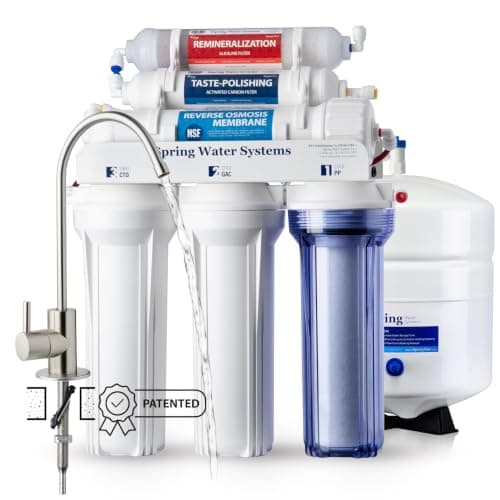 iSpring RCC7AK 6-Stage Reverse Osmosis SystemNSF/ANSI 58 certified under-sink RO with 97.4% fluoride published, if you can plumb it in. iSpring RCC7AK 6-Stage Reverse Osmosis SystemNSF/ANSI 58 certified under-sink RO with 97.4% fluoride published, if you can plumb it in. | Cheapest per gallon | $188.81 - View on Amazon $234.99 — 20% off #ad Price as of October 7, 2026. We may earn a commission. Disclosure. |
They are built for different failures
A Berkey is a stainless pot with gravity elements in it. Reverse osmosis is a membrane that needs line pressure or a pump. That single mechanical difference drives everything else: what each can remove, what certification each can hold, what it costs to run, and whether it works when the power is out.
| Berkey gravity system | Reverse osmosis | |
|---|---|---|
| Mechanism | Gravity through composite carbon elements | Pressure through a semi-permeable membrane |
| Certified standard | NSF/ANSI 42 — chlorine, taste and odor | NSF/ANSI 58, often with 53 and P473 alongside |
| Fluoride | Only with separate PF-2 elements, on company testing | A certified claim on 129 system models in NSF's listing |
| Nitrate and arsenic | No certified claim | Certified claims exist under 58 |
| Dissolved solids | Largely unchanged | Reduced by 90%+ on certified systems |
| Power required | None | Mains pressure, or an outlet for tankless and countertop units |
| Wastewater | None | Yes — commonly 2:1 or 3:1 in the product's favor on modern systems |
| Service cycle | 1,050 gallons in the NSF listing | Cartridges in months, membrane in years |
| Minerals left in | Yes | No, unless remineralized |
What the certifications actually say
This is where most comparisons of these two go wrong, because they treat marketing claim lists as equivalent evidence. They are not.
Berkey. NSF lists the Big, Royal and Travel Berkey systems under NSF/ANSI 42 for chlorine reduction and taste and odor reduction. There is no NSF/ANSI 53 health-effects listing. The pathogen and heavy-metal figures the brand is known for come from laboratory testing it commissioned. The brand page sets that out in full, including the EPA enforcement record and the element supply problem.
Reverse osmosis. NSF/ANSI 58 is a certification program with optional contaminant claims inside it, and the claims are countable: searching NSF's listings returns 129 system models with a fluoride reduction claim, 122 with hexavalent chromium and 85 with nitrate or nitrite. Those are listings you can look up by model number.
That is the honest shape of the comparison: one technology has a narrow certified claim and a wide tested claim; the other has a narrower set of products but certified claims for the contaminants people actually buy filtration to remove.
Where gravity genuinely wins
- No power, no pressure. A gravity system works during an outage, at a cabin, or anywhere there is no plumbing to connect to. No reverse osmosis system does.
- No wastewater. Every gallon poured in comes out. Reverse osmosis sends some to the drain by design, which matters on a well, a septic field or a meter.
- Minerals stay in. No flat taste, no remineralizing cartridge to buy — the mineral question cuts both ways and gravity carbon simply does not raise it.
- Long service cycle. 1,050 gallons in the NSF listing is far beyond any pitcher cartridge, and beyond most carbon blocks.
Where reverse osmosis genuinely wins
- Fluoride, nitrate, arsenic, dissolved solids. These are small dissolved ions. Carbon adsorption does not hold them; a membrane rejects them. The fluoride answer explains the physics and the optional-claim trap to check for.
- Checkable claims. A certified system names its contaminants on a public listing with ongoing surveillance behind it.
- Cost per gallon, once installed. An under-sink system filters everything you draw at a fraction of the cost of gravity elements, with no refilling.
- No refill routine. Gravity means pouring, waiting, and remembering. A plumbed system means opening a tap.
The honest decision
| Your situation | The answer | Why |
|---|---|---|
| Fluoride, nitrate or arsenic on your report | Reverse osmosis | The only technology with certified claims for them |
| Off-grid, cabin or outage preparedness | Gravity | Nothing else works without pressure or power |
| Renting, cannot plumb anything | Countertop reverse osmosis | Certified claims with no installation at all |
| Well water with sediment and iron | Neither on its own | Treat the sediment and iron first, then filter |
| Chlorine taste only | Neither | A certified pitcher is a fraction of the price |
| You want both | Reverse osmosis at the tap, gravity in the cupboard | One for daily use, one for when the power is out |
The last row is not a joke. Plenty of preparedness-minded households run a certified system for everyday water and keep a gravity unit boxed for emergencies, and that is a coherent position — it just costs twice.
Two practical warnings
Check element availability before buying a gravity system. On the date at the top of this page, complete Berkey systems were in stock with elements included, while authentic Black Berkey replacement elements were not available at the retailer we track. A gravity housing whose consumables you cannot buy is a pot.
Check that your reverse osmosis system holds the claim you need. Fluoride, nitrate and arsenic reduction are optional claims inside NSF/ANSI 58. A system can be honestly certified and never have been tested for any of them — the RO roundup lists which ones publish what.
The cost-per-gallon math
A household drinking two gallons a day uses about 730 gallons a year.
At the 1,050-gallon service cycle in the NSF listing, a set of gravity elements covers a little over a year — if you can buy replacements. An under-sink reverse osmosis system covers the same year on a cartridge set and part of a membrane, at a materially lower cost per gallon, plus the water it sends to the drain. A countertop reverse osmosis unit sits between the two and needs no plumbing.
Price all three on cost per gallon over five years rather than on the sticker, and then let the contaminant on your report decide — because on fluoride, nitrate or arsenic, only one of these technologies has a certified answer.
We show the arithmetic rather than a verdict so you can redo it with the price you actually pay. Filter prices move; the rated capacities above do not.
The picks in full
Best of both worlds
AquaTru Classic Countertop Reverse Osmosis Purifier
AquaTru
Reverse osmosis performance with no plumbing, no drilling and no landlord conversation. You pay for that with counter space, a wait, and two tanks you fill and empty by hand.
Certification status
Certified by IAPMO to NSF/ANSI 53, 58, 401 and P473, covering lead, reverse-osmosis performance, emerging compounds and the PFOA/PFOS protocol.
Published specifications
| Filtration | 4-stage countertop reverse osmosis |
|---|---|
| Clean water tank | 0.75 gallons |
| Tap water tank | 1 gallon |
| Installation | None — no plumbing connection |
| Certified standards | NSF/ANSI 53, 58, 401, P473 (IAPMO) |
What we like
- Real reverse osmosis with a P473 PFOA/PFOS certification and zero installation
- The strongest answer available to a renter with a lead or PFAS problem
- No drilling, no drain saddle, no landlord permission needed
What we do not
- Takes up substantial counter space
- You refill and empty tanks by hand — it is not on-demand
- Highest purchase price in the no-plumbing tier by a wide margin
Skip it if
Anyone who can plumb in an under-sink system. A permanent under-sink RO is cheaper per gallon, on-demand, and out of sight. Buy this when you genuinely cannot install.
$475.00 — 15% off
#ad Price as of October 7, 2026. We may earn a commission. Disclosure.
Where these specifications came from
If power is the constraint
Big Berkey 2.25-Gallon Gravity System (with BB9-2 elements)
Berkey
The gravity system everyone has heard of. NSF lists it under one standard — chlorine, taste and odor — while the long contaminant list it is famous for rests on testing the company commissioned. It also has a supply problem: authentic replacement elements have been hard to buy.
Certification status
NSF's certified product listing records the Big Berkey, Royal Berkey and Travel Berkey systems under NSF/ANSI 42 for chlorine reduction and taste and odor reduction, at a 1,050-gallon service cycle, held by New Millennium Concepts Ltd. There is no NSF/ANSI 53 health-effects listing: the heavy-metal and pathogen figures the brand publishes come from laboratory testing it commissioned rather than from a certification.
Published specifications
| Capacity | 2.25 gallons |
|---|---|
| Certified standard | NSF/ANSI 42 — chlorine, taste and odor |
| Service cycle in the NSF listing | 1,050 gallons |
| Elements | Two BB9-2 Black Berkey elements, included |
| Installation | None — gravity, no power, no plumbing |
| Housing | Stainless steel |
| Heavy metals and pathogens | Company-commissioned laboratory testing, not a certification listing |
What we like
- Works with no power, no pressure and no plumbing, which is the format's real advantage
- A 1,050-gallon service cycle in the NSF listing, an order of magnitude beyond a pitcher cartridge
- Stainless housing rather than a plastic reservoir that scratches and holds odors
What we do not
- The certification covers chlorine, taste and odor only — none of the claims the brand is known for
- Authentic Black Berkey replacement elements have been unavailable at the listing we track
- Slow gravity flow and a refill routine, like every gravity system
- Takes substantial counter space for its usable volume
Skip it if
Anyone who needs a certification listing for a specific contaminant, and anyone who cannot confirm that replacement elements are in stock before buying the housing.
#ad Price as of October 7, 2026. We may earn a commission. Disclosure.
Where these specifications came from
Cheapest per gallon
iSpring RCC7AK 6-Stage Reverse Osmosis System
iSpring
The value pick of the reverse-osmosis tier: a WQA Gold Seal system with an alkaline stage, usually at the lowest price of anything here that carries a real certification.
Certification status
Certified against NSF/ANSI 58 for TDS reduction and carries the WQA Gold Seal, with 97.2% TDS removal certified.
Published specifications
| Output | 75 GPD |
|---|---|
| Stages | 6, including alkaline remineralization |
| Certified TDS reduction | 97.2% |
| Feed pressure | 45-70 psi |
| Feed temperature | 40-100 degrees F |
| Assembled size | 15.5" deep x 19.5" high, 25 lb |
| Certification | NSF/ANSI 58, WQA Gold Seal |
What we like
- Certified performance at the lowest price in the tier
- Push-fit tubing makes a first-time install genuinely manageable
- Alkaline stage included rather than sold as an upgrade
What we do not
- Narrow 45-70 psi feed window — low-pressure homes may need a booster pump
- Tank plus housing needs real cabinet depth
- Conventional reverse-osmosis drain ratio
Skip it if
Homes with feed pressure below 45 psi that will not add a booster pump, and anyone who wants a tankless footprint.
$234.99 — 20% off
#ad Price as of October 7, 2026. We may earn a commission. Disclosure.
Where these specifications came from
Questions people actually ask
Is Berkey better than reverse osmosis?
For off-grid use, yes — nothing else filters without power or pressure. For documented contaminant removal, no: reverse osmosis holds certified claims for fluoride, nitrate, arsenic and dissolved solids, while NSF lists Berkey systems under NSF/ANSI 42 for chlorine, taste and odor only, with the wider claim list resting on company-commissioned laboratory testing.
Does Berkey remove fluoride like reverse osmosis does?
Only with the separate PF-2 elements, and that claim rests on testing the company commissioned rather than a certification listing. Reverse osmosis fluoride claims are certified under NSF/ANSI 58, and roughly 129 system models in NSF's database carry one.
Does reverse osmosis waste water?
Yes, by design — a membrane rejects contaminants into a drain stream. Modern systems publish ratios around 2:1 or 3:1 in the product's favor, far better than older systems. A gravity system produces no wastewater at all, which is a real advantage on a well or septic system.
Which is cheaper to run?
Under-sink reverse osmosis, once installed: cartridges in months and a membrane in years, against gravity elements rated at 1,050 gallons that cost considerably more per set. The gravity system wins on purchase price and on not needing installation.
Can I use a gravity filter during a power outage?
Yes, and that is its clearest advantage. Gravity needs no pressure and no electricity. Reverse osmosis needs line pressure at minimum, and tankless or countertop units need mains power, so neither works in an outage.