CDC says tap water, filtered or unfiltered, is generally safe for mixing powdered formula. Boil it for babies under two months, born preterm, or immunocompromised. If your water has nitrate, lead or fluoride, boiling will not help and a certified reverse osmosis system is the fix.
Quick picks
Tap any row to jump to the full write-up. The button goes straight to the retailer.
| # | Product | Best for | Price |
|---|---|---|---|
| 1 | 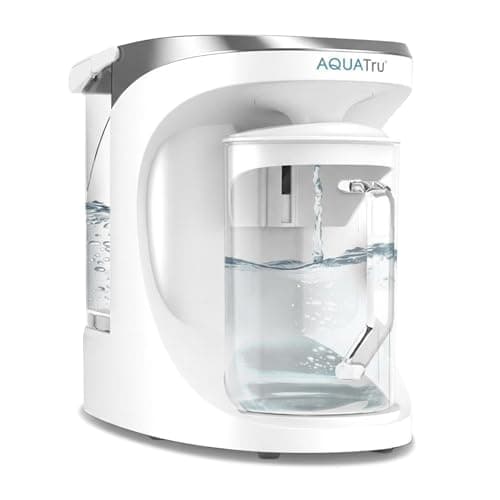 AquaTru Carafe Countertop Reverse Osmosis PurifierCertified under NSF/ANSI 58 for nitrate, lead and fluoride at once — the three that matter here — with no plumbing. AquaTru Carafe Countertop Reverse Osmosis PurifierCertified under NSF/ANSI 58 for nitrate, lead and fluoride at once — the three that matter here — with no plumbing. | Best for formula water | $356.25 - View on Amazon $375.00 — 5% off #ad Price as of October 17, 2026. We may earn a commission. Disclosure. |
| 2 | 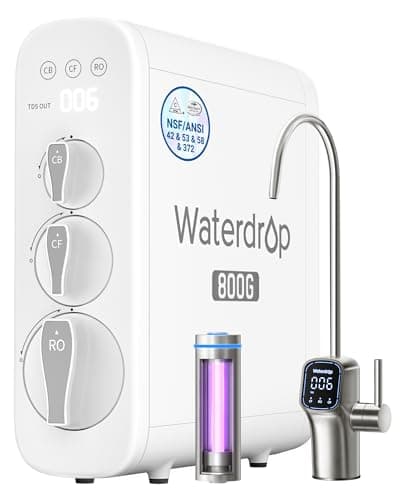 Waterdrop G3P800 Tankless Reverse Osmosis SystemUnder-sink reverse osmosis on demand, so you are not refilling a tank at three in the morning. Waterdrop G3P800 Tankless Reverse Osmosis SystemUnder-sink reverse osmosis on demand, so you are not refilling a tank at three in the morning. | Best plumbed option | $759.00 - View on Amazon $999.00 — 24% off #ad Price as of October 17, 2026. We may earn a commission. Disclosure. |
| 3 | 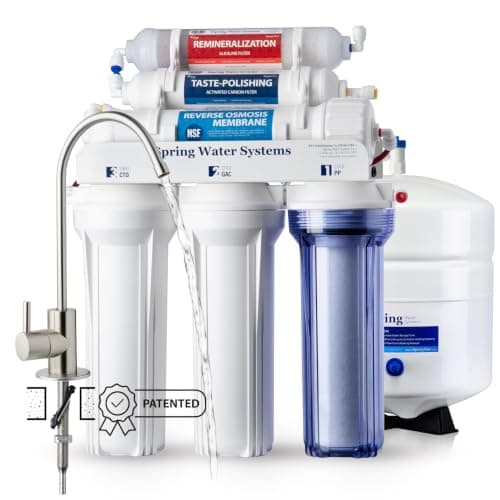 iSpring RCC7AK 6-Stage Reverse Osmosis SystemNSF/ANSI 58 certified for TDS with the WQA Gold Seal, at the bottom of the plumbed price range. iSpring RCC7AK 6-Stage Reverse Osmosis SystemNSF/ANSI 58 certified for TDS with the WQA Gold Seal, at the bottom of the plumbed price range. | Cheapest certified reverse osmosis | $211.49 - View on Amazon $234.99 — 10% off #ad Price as of October 17, 2026. We may earn a commission. Disclosure. |
| 4 | 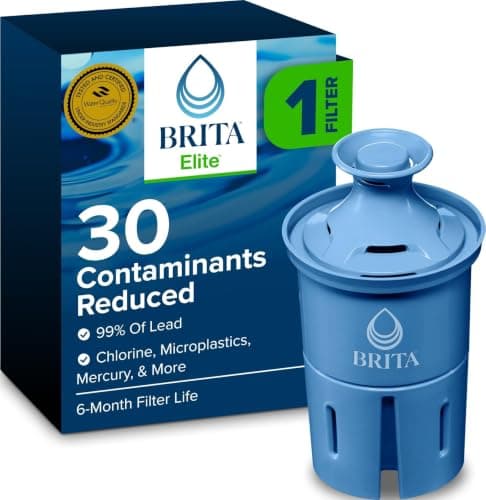 Brita Elite Filter (with any Brita pitcher)Certified for lead under NSF/ANSI 53. It will not touch nitrate or fluoride, and this page is explicit about that. Brita Elite Filter (with any Brita pitcher)Certified for lead under NSF/ANSI 53. It will not touch nitrate or fluoride, and this page is explicit about that. | If lead is the only concern | $19.88 - View on Amazon #ad Price as of October 17, 2026. We may earn a commission. Disclosure. |
Start here: CDC's actual position on tap water
The anxiety around this question is much larger than the official guidance, so it is worth leading with what the agency says rather than with what the internet says.
CDC's position is that it is generally safe to mix powdered formula with tap water, filtered or unfiltered, following the instructions on the formula container. That is the default for most families on a municipal supply, and it is the sentence most of the market for "nursery water" does not know exists.
There are then two specific exceptions, and they point in opposite directions. One is microbiological and is solved with heat. The other is chemical and is solved with a filter. Confusing them is the single most common mistake on this topic, and the rest of this page is organized around keeping them apart.
The heat exception: who needs boiled water, and for how long
This is about Cronobacter and other organisms that powdered formula is not sterile against, and the risk group is narrow and specific.
CDC advises boiling the water for babies under two months old, born before 37 weeks, or with a weakened immune system. The instruction is unusually precise about sequencing: Boil the water and then wait about five minutes before mixing with powdered infant formula. The wait matters — water straight off a rolling boil can damage the formula's nutrients, and water left to go cold does not kill anything in the powder.
Then let the made-up bottle cool and test it on your wrist before feeding: it should feel warm, not hot. For babies outside that risk group, CDC does not ask for boiling at all.
Note what boiling is doing in that instruction. It is killing organisms — in the water, and by hot-mixing, in the powder. It is not improving the water's chemistry, and the next section is the reason that distinction is not pedantry.
The chemical exception, and the sentence to remember
If there is one line from the official guidance to keep, it is this one, because it closes off a whole category of bad advice.
CDC states plainly that water contaminated with harmful chemicals or toxins cannot be made safe by boiling, disinfecting, or filtering, and that in that situation you should use bottled water or ready-to-feed formula and follow local public health advice.
Read carefully, that covers filtering as well as boiling — because "a filter" in the general sense includes the carbon pitcher most households own, and a carbon pitcher is not a nitrate or fluoride treatment. Where this page differs from a flat reading of that sentence is in the specifics: there are certified systems for the three chemicals that matter to an infant, and they are named below. The guidance is warning against assuming your existing filter is one of them.
The three chemicals that actually matter for a bottle
Not every contaminant is an infant question. These three are, each for a different reason, and each with a different answer.
Nitrate — the one with an acute risk and a counterintuitive trap
Nitrate is the reason this page exists at all. EPA sets the maximum contaminant level at 10 mg/L as nitrogen and describes the health effect in language it uses almost nowhere else: Infants below the age of six months who drink water containing nitrate in excess of the MCL could become seriously ill and, if untreated, may die, with shortness of breath and blue-baby syndrome among the symptoms. Nitrite carries the same effects at a 1 mg/L limit.
Now the trap. Boiling does not remove nitrate — it removes water. Virginia's health department puts it directly: Heating or boiling your water WILL NOT remove nitrate. Because some of the water will evaporate during the boiling process, the nitrate levels of water can actually increase slightly in concentration if the water is boiled. Florida's health department says the same thing in fewer words: Boiling water may make the nitrate level higher, so that could make the situation worse.
So a household on a well that boils formula water out of caution, and has a nitrate problem, is making it marginally worse while believing it is being careful. What does work is a short list: reverse osmosis, ion exchange and distillation. Nitrate is why reverse osmosis leads the picks on this page, and the nitrate roundup goes deeper if your test came back high.
Lead — a plumbing problem, not a source-water problem
EPA regulates lead with a treatment technique and an action level of 0.015 mg/L, dropping to 0.010 mg/L from 1 November 2027, against a maximum contaminant level goal of zero. The listed effects in infants and children are delayed physical or mental development and deficits in attention span and learning.
Lead almost never arrives in the water the utility delivers; it dissolves out of the service line, solder and fixtures between the main and your tap. That has two practical consequences for a bottle. First, your utility's test results do not describe your kitchen, so a tap test is the only honest answer. Second, boiling concentrates lead for the same reason it concentrates nitrate.
The good news is that lead is the best-covered contaminant in the certified market. Plenty of pitchers hold an NSF/ANSI 53 lead claim, which is why the Brita Elite appears in the picks for households whose only concern is lead — the lead roundup lists the rest.
Fluoride — a real consideration, and a modest one
This one needs proportion rather than alarm, and CDC's own framing supplies it.
The agency says powdered or liquid concentrate formula may increase the chance of dental fluorosis if it is a child's main source of food and if the water used to mix the formula is fluoridated, while ready-to-feed formula contains little fluoride and does not cause dental fluorosis. The condition it is talking about is cosmetic — faint white streaking on developing teeth — and it only develops while teeth are forming under the gums, up to about age eight.
CDC's suggested mitigation is proportionate to that: parents can use low-fluoride bottled water some of the time to mix infant formula to lessen this risk. Note "some of the time". It also tells you how to identify such water on a shelf: Bottled water labeled as de-ionized, purified, demineralized, or distilled contains no or only trace amounts of fluoride, unless fluoride is listed as an added ingredient.
Those four words are a description of what reverse osmosis and distillation produce, which is the quiet link between this guidance and the hardware. If you would rather not buy water by the case, a certified reverse osmosis system makes the same thing at the tap — the fluoride roundup covers which systems hold the certification, and a carbon pitcher is not one of them.
Putting it together
| Your situation | What to do | What will not help |
|---|---|---|
| Baby under 2 months, preterm, or immunocompromised | Boil, wait five minutes, then mix | A filter — it does not sterilize |
| Municipal supply, healthy term baby | Tap water, filtered or not, per CDC | Nothing needed |
| Boil-water notice in effect | Boil, or use bottled water | Any filter on this site |
| Nitrate above 10 mg/L | Reverse osmosis, ion exchange or distillation | Boiling — it concentrates nitrate |
| Lead at the tap | A certified NSF/ANSI 53 lead filter, or reverse osmosis | Boiling — it concentrates lead |
| Fluoridated supply, powdered formula | Low-fluoride water some of the time, or reverse osmosis | Carbon — it does not remove fluoride |
| Private well, untested | Test first | Guessing from a neighbor's result |
The pattern is worth stating once in the open, because it generalizes past infant feeding: heat kills things, membranes remove things, and carbon removes a specific subset of things. If you are not sure which problem you have, the tier guide starts from the symptom rather than the product.
Bottled, nursery and ready-to-feed, honestly
These are the easy answers, and they are legitimate — they are just more expensive and less sterile than people assume.
Bottled water, including water sold as nursery water, is not sterile unless the label says so. If you are in the boil-the-water risk group, a sealed bottle does not exempt you from the instruction unless it is labelled sterile. Ready-to-feed formula is sterile and is the genuinely simple answer for the first two months — CDC names it as the alternative when water quality is in doubt.
The cost case for a filter rather than bottles is the usual one and it is strong here because formula households use water in quantity, every day, for roughly a year. The bottled-water comparison does the arithmetic properly, and the short version is that a certified system pays for itself inside that year at formula-feeding volumes.
The cost-per-gallon math
Formula is an unusually predictable load, which makes this arithmetic easier than most on this site.
A baby on formula gets through roughly 25 to 35 oz a day at peak, so call it a quarter of a gallon. Over a year that is around 90 gallons of made-up formula, plus whatever the rest of the household drinks.
Against a reverse osmosis system's cartridge ratings that is a small load: the AquaTru Carafe's 300-gallon pre-filter covers more than three years of bottles on its own, and a plumbed under-sink system more still. Against cases of bottled water at a quarter-gallon a day it is 365 purchases. That gap, not the headline price, is the real comparison.
We do not print product prices in this text. The buy buttons carry the live figure and the date it was checked, which is the only price worth quoting.
We show the arithmetic rather than a verdict so you can redo it with the price you actually pay. Filter prices move; the rated capacities above do not.
The picks in full
Best for formula water
AquaTru Carafe Countertop Reverse Osmosis Purifier
AquaTru
The Classic's certification table in two-thirds of the footprint, pouring into glass instead of a plastic tank. You give up capacity and gain a published 63% recovery rate, which is better than almost any plumbed system manages.
Certification status
IAPMO publishes a performance data sheet covering Carafe models AT100, AT110, AT120, AT130 and AT140, certified under NSF/ANSI 42, 53 and 58, with additional testing to NSF/ANSI 401 and NSF Protocol 53 for PFOA and PFOS. The NSF/ANSI 58 table records average reductions of 99.2% for lead, 99.9% for cysts, 96.4% for fluoride, 98.8% for pentavalent arsenic, 97.5% for hexavalent chromium, 98.3% for nitrate and 94.4% for TDS. PFOA and PFOS average 99% under NSF Protocol 53.
Published specifications
| Filtration | 4-stage countertop reverse osmosis |
|---|---|
| Carafe | 64 oz borosilicate glass |
| Clean water tank | 0.5 gallons (1.9 L) |
| Tap water tank | 0.66 gallons (2.5 L) |
| Daily production rate | 35 GPD |
| Efficiency rating | 63% (IAPMO) |
| Certified standards | NSF/ANSI 42, 53, 58 (IAPMO) |
| Dimensions | 13 in H x 14 in D x 7.5 in W |
| Power | 120 V, 60 Hz |
| Max inlet hardness | 10 gpg (171 mg/L) |
What we like
- A published 63% efficiency rating — most tank reverse osmosis systems send three or four gallons to drain per gallon produced
- The NSF/ANSI 58 claim list reaches lead, fluoride, nitrate, arsenic, chromium-6 and cysts, which carbon cannot
- Glass carafe rather than a plastic holding tank, and it goes in the fridge
- No plumbing, no drilling and no drain saddle — the whole certification travels with a renter
What we do not
- A 0.5 gallon clean tank against the Classic's 0.75 — you refill it more often for the same household
- Three cartridges on three different clocks, and the manufacturer's web page and the certifier's data sheet disagree on the pre/carbon interval
- Needs a counter outlet and 7.5 inches of width it does not share
- Not for water above 10 gpg hardness without softening first, or the membrane scales
Skip it if
A household that drinks a lot of water. The clean tank holds half a gallon and refills at 35 gallons a day, so a family of four will be waiting on it. Buy the Classic for its larger tanks, or a plumbed under-sink system if you can install one.
$375.00 — 5% off
#ad Price as of October 17, 2026. We may earn a commission. Disclosure.
Best plumbed option
Waterdrop G3P800 Tankless Reverse Osmosis System
Waterdrop
Tankless reverse osmosis that gives back the cupboard a pressure tank would eat, fills a glass without the pause, and sends markedly less water down the drain than a classic tank system.
Certification status
Certified to NSF/ANSI 42 for chlorine reduction, NSF/ANSI 53 and 58 for TDS, fluoride, cadmium, hexavalent chromium and selenium, and NSF/ANSI 372 for lead-free materials.
Published specifications
| Output | 800 GPD |
|---|---|
| Pure-to-drain ratio | 3:1 |
| Format | Tankless — no pressure tank |
| Certified standards | NSF/ANSI 42, 53, 58, 372 |
| Installation | Two holes: smart LED faucet and drain |
| Faucet | Included, with TDS display |
What we like
- No pressure tank, so it fits cabinets a tank system cannot
- 3:1 pure-to-drain is far better than the ratio typical of older reverse osmosis
- 800 GPD means no waiting for a tank to refill
What we do not
- Needs a power outlet under the sink — a real constraint in older kitchens
- Proprietary filter cartridges, so you are tied to Waterdrop's pricing
- Requires drilling for the included faucet unless you have a spare hole
Skip it if
Renters, and anyone with no outlet under the sink. It is a permanent, powered installation — a countertop unit is the answer if you cannot commit to that.
$999.00 — 24% off
#ad Price as of October 17, 2026. We may earn a commission. Disclosure.
Where these specifications came from
Cheapest certified reverse osmosis
iSpring RCC7AK 6-Stage Reverse Osmosis System
iSpring
The value pick of the reverse-osmosis tier: a WQA Gold Seal system with an alkaline stage, usually at the lowest price of anything here that carries a real certification.
Certification status
Certified against NSF/ANSI 58 for TDS reduction and carries the WQA Gold Seal, with 97.2% TDS removal certified.
Published specifications
| Output | 75 GPD |
|---|---|
| Stages | 6, including alkaline remineralization |
| Certified TDS reduction | 97.2% |
| Feed pressure | 45-70 psi |
| Feed temperature | 40-100 degrees F |
| Assembled size | 15.5" deep x 19.5" high, 25 lb |
| Certification | NSF/ANSI 58, WQA Gold Seal |
What we like
- Certified performance at the lowest price in the tier
- Push-fit tubing makes a first-time install genuinely manageable
- Alkaline stage included rather than sold as an upgrade
What we do not
- Narrow 45-70 psi feed window — low-pressure homes may need a booster pump
- Tank plus housing needs real cabinet depth
- Conventional reverse-osmosis drain ratio
Skip it if
Homes with feed pressure below 45 psi that will not add a booster pump, and anyone who wants a tankless footprint.
$234.99 — 10% off
#ad Price as of October 17, 2026. We may earn a commission. Disclosure.
Where these specifications came from
If lead is the only concern
Brita Elite Filter (with any Brita pitcher)
Brita
The cheapest route to an NSF/ANSI 53 lead certification. It drops into a pitcher most households already have, and it is emphatically not the same filter as the white Brita Standard.
Certification status
Certified to NSF/ANSI 42, 53 and 401. The lead certification belongs to the Elite (blue) filter only — the Standard (white) filter is certified to NSF/ANSI 42 for taste and odor and is not certified for lead. Per Brita's January 2026 performance data sheet the Elite is not certified for PFOA or PFOS, and no Brita pitcher filter is certified for fluoride.
Published specifications
| Rated filter life | 120 gallons / about 6 months |
|---|---|
| Standard filter life, for comparison | 40 gallons / about 2 months |
| Certified standards | NSF/ANSI 42, 53, 401 |
| Lead | Certified under NSF/ANSI 53 |
| PFOA / PFOS | Not certified (January 2026 performance data sheet) |
| Fluoride | Not certified, not claimed |
What we like
- Genuine NSF/ANSI 53 lead certification at the lowest entry price of anything on this site
- Fits Brita pitchers and dispensers already in millions of kitchens — no new hardware
- Three times the rated life of the Standard filter, which changes the cost-per-gallon math
What we do not
- Not certified for PFOA or PFOS, so it is the wrong answer to a PFAS worry
- No fluoride claim at all
- Slow gravity flow, like every pitcher
Skip it if
Anyone whose actual worry is PFAS or fluoride. The Elite is not certified for either, and buying it for those is buying the wrong thing.
#ad Price as of October 17, 2026. We may earn a commission. Disclosure.
Where these specifications came from
Questions people actually ask
Can I use filtered water for baby formula?
Yes. CDC says it is generally safe to mix powdered formula with tap water, filtered or unfiltered, following the formula container's instructions. The caveats are that a filter does not sterilize — so it does not replace boiling for babies under two months, born preterm, or immunocompromised — and that an ordinary carbon filter does not remove nitrate or fluoride.
Can I use reverse osmosis water for baby formula?
Yes, and it is the strongest option if your water has a chemical problem. A certified reverse osmosis system covers nitrate, lead and fluoride in one listing, which no carbon filter does. It does not sterilize, so the boiling instruction for babies under two months, born before 37 weeks, or with a weakened immune system still applies.
Do I need to boil water for formula?
Only for specific babies. CDC advises boiling for infants under two months old, born before 37 weeks, or with a weakened immune system, to kill germs such as Cronobacter. The instruction is to boil the water and then wait about five minutes before mixing with the powder, then cool the bottle and test it on your wrist. For babies outside that group CDC does not ask for boiling.
Does boiling water remove nitrate?
No, and it makes it slightly worse. Virginia's health department states that heating or boiling will not remove nitrate, and that because some water evaporates during boiling the nitrate concentration can actually increase slightly. Florida's health department warns boiling may make the nitrate level higher. Nitrate is removed by reverse osmosis, ion exchange or distillation.
Should I use fluoride-free water for formula?
Some of the time, if your supply is fluoridated and your baby is on powdered or concentrate formula. CDC says that combination may increase the chance of mild dental fluorosis, a cosmetic effect on developing teeth, and that parents can use low-fluoride bottled water some of the time to lessen the risk. It identifies low-fluoride water by the labels de-ionized, purified, demineralized or distilled. Ready-to-feed formula contains little fluoride.
Is nursery water sterile?
Not unless the label says so. Bottled water, including water marketed for nurseries, is not sterile by default, so it does not substitute for boiling if your baby is in the risk group CDC names. Ready-to-feed formula is sterile and is the straightforward alternative when water quality is in doubt.
What if my tap water has a chemical contaminant?
CDC is direct about this: water contaminated with harmful chemicals or toxins cannot be made safe by boiling, disinfecting, or filtering, and the advice is to use bottled water or ready-to-feed formula and follow local public health guidance. The nuance is that certified systems do exist for specific chemicals — reverse osmosis for nitrate, fluoride and lead — so the warning is against assuming the filter you already own is one of them.
Does a Brita remove nitrate for formula?
No. Carbon filtration does not remove nitrate, and no mainstream pitcher carries a nitrate certification. A Brita Elite is certified for lead under NSF/ANSI 53, which is useful if lead is your only concern, but if your test shows nitrate you need reverse osmosis, ion exchange or distillation.
Sources
- CDC — Infant formula preparation and storage
- CDC — Community water fluoridation FAQ: infant formula and fluoride
- EPA — National Primary Drinking Water Regulations
- Virginia Department of Health — nitrate in private wells
- Florida Department of Health — well water facts: nitrate
- NSF — Certified Products and Systems